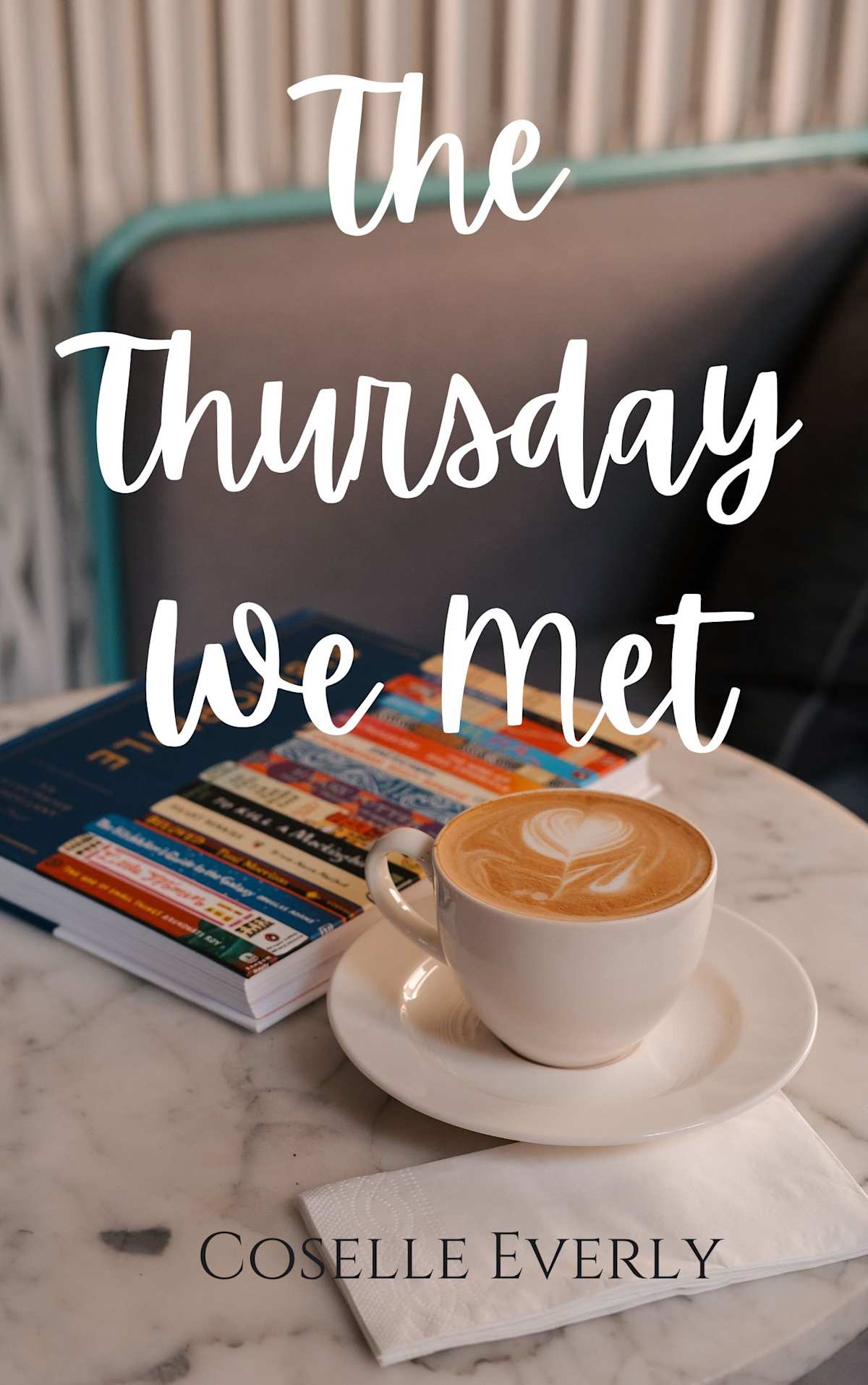
Before you read any further, go read Chapter One of The Thursday We Met.
Don’t read this article first.
Go get yourself a cup of tea or coffee if you’d like. Find a comfortable chair. Put your phone somewhere out of reach.
Then read Chapter One.
And when you finish, come back here.
I’ll wait.
Now, let's slow down.
One of the things I love about reading slowly is that it gives us permission to stop treating a book like something we need to get through.
There’s no prize for finishing the chapter fastest.
We don't have to remember every detail.
And we don't even have to know what the story is going to mean yet.
Instead, we're going to try something a little different.
We're going to notice what stayed with us.
First, don't look back.
Before you open the chapter again, close the book—or set your screen aside—and ask yourself:
What do I remember?
Not:
What happened?
Not:
Who said what?
Just:
What stayed with me?
Maybe you remember Chloe leaving work at 5:17.
Maybe you remember the twelve-minute walk to The Open Book.
Maybe it was the smell of old paper, polished wood, coffee, and something sweet baking.
Maybe you remember the man by the window.
Maybe it was the little blue paperback.
Maybe it was something much quieter—the feeling Chloe has that her life is perfectly fine, but somehow she is still waiting for it to begin.
Don't worry if your answer seems insignificant.
Those little things are exactly what we're looking for.
Notice the threshold.
Chloe's Thursday begins before she ever reaches the bookstore.
At 5:17, she leaves work.
She walks.
She passes the bakery.
She passes the florist.
And twelve minutes later, she arrives at The Open Book.
It's a very ordinary transition, but it matters.
Her workday doesn't simply end when she closes her spreadsheet.
She has somewhere to go.
Somewhere that asks nothing of her.
For the next hour, she belongs to no one.
I love that idea because most of us have little transitions like this, even if we don't always recognize them.
A cup of tea after the children go to bed.
A walk after work.
Reading in bed before turning out the light.
Sitting in the car for five quiet minutes before going inside.
These small rituals tell us:
This part of the day is over. Now I can become myself again.
Journal
What small ritual helps you leave one part of your day and enter another?
It doesn't have to be impressive.
In fact, I suspect the best ones usually aren't.
Look around The Open Book.
Now go back to the chapter and think about the people Chloe notices.
There's the woman in the poetry section.
The two men quietly arguing about the ending of a detective novel.
The person laughing behind the counter.
The woman writing in her notebook with her tea.
Nobody seems to be in a hurry.
Nobody seems particularly interested in looking impressive.
They're simply reading, talking, thinking, and being.
And then Chloe has this realization:
These are the kinds of people I wish I knew.
That's a very different desire from wanting more friends.
She's beginning to understand what kind of friendship she wants.
Quieter friendships.
People who can sit in silence.
People who get excited about beautiful sentences.
People who understand why a bookstore can feel like home.
Journal
What kind of people make you feel more like yourself?
Not who do you think you should spend time with.
Who leaves you feeling more like yourself after you've been with them?
That's worth noticing.
Now notice the books.
There are books everywhere in this chapter, obviously.
But don't rush past them.
Chloe comes to The Open Book every Thursday.
Sometimes she buys a book.
Sometimes she doesn't.
Sometimes she simply wanders the shelves and reads first pages.
Then she finds the little blue paperback.
It's worn around the edges.
It's not what she would normally choose.
And yet she takes it.
Cara tells her, “Good choice.”
When Chloe asks if Cara has read everything in the store, Cara says:
“Not yet.”
And when Chloe questions that—Yet?—Cara simply says:
“I have time.”
There's something lovely about that exchange.
Cara isn't rushing.
She's not trying to finish every book.
She has time.
And perhaps that's part of what we're practicing here, too.
The experiment
For this first chapter, we're going to keep the slow-reading experiment very simple.
Read one chapter.
Then stop.
Don't immediately open the next chapter.
Don't worry about how many pages you've finished.
Don't look ahead.
Instead, give the chapter a little room to stay with you.
You might write down:
- One image you remember
- One sentence or idea that caught your attention
- One sensory detail
- One question you have
- One thing the chapter made you feel or wonder about
That's it.
You don't need a page of profound thoughts.
You don't need to analyze the symbolism.
You don't need to figure out where the story is going.
You just need to notice.
And there's one more thing.
At the end of Chapter One, Chloe doesn't know what is coming.
We do know a little more than she does.
We know the book she noticed in the man's hands will soon be hers.
We know she'll know his name by next Thursday.
We know the book in her bag will be finished before then.
And we know Cara is waiting for the right moment to put another book into Chloe's hands.
The story has given us questions.
But it hasn't demanded that we answer them yet.
And that's exactly where I want to leave you.
What do you think you're going to notice next Thursday?
Not just in Chloe's story.
In yourself.
Because that's the other part of slow reading.
Sometimes the book changes.
And sometimes, very quietly, we do.
Until next time...
Read one chapter.
Try one small slow-reading experiment.
Journal about what you noticed.
And then leave a little room for the story to follow you into the rest of your week.
Next time, we'll read Chapter Two.