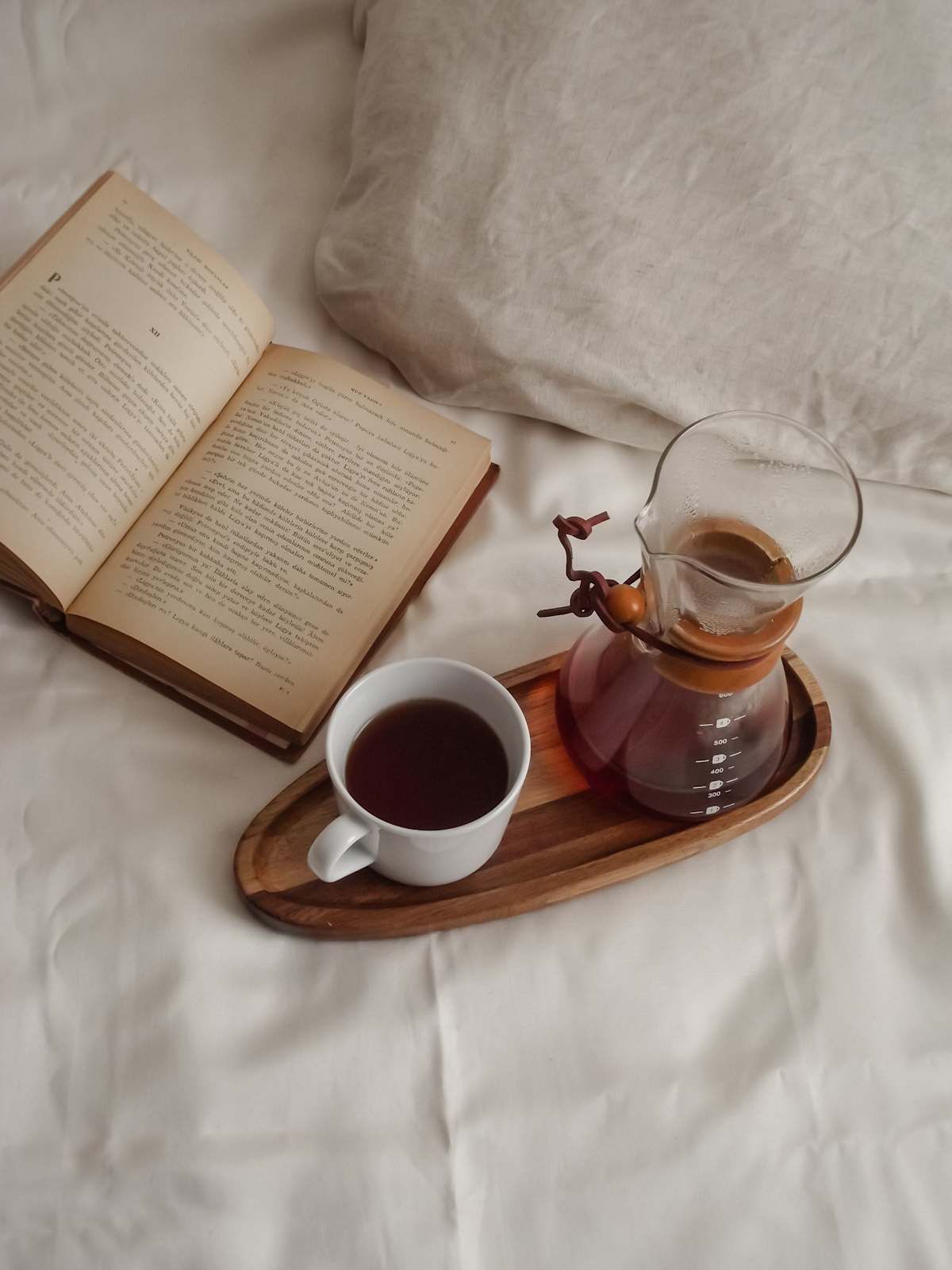
This post goes along with Chapter Two: The Art of Noticing While You Read find it here on spotify
Have you ever finished a book and wished you could stay there a little longer? Not necessarily because you wanted to know what happened next. Maybe you just liked being there. You liked the little bookstore, the house with the creaky stairs, the garden behind the cottage, the café where everyone seemed to know each other, the rainy street outside the window.
Sometimes a book gives us a place that feels almost as real as somewhere we've actually visited. And I've been thinking about how much of that feeling comes from the little details. The things we notice without really trying - A particular kind of tea, the sound of rain, a yellow sweater, a kitchen window left open in the afternoon, a stack of books beside someone's bed, the smell of bread coming from somewhere nearby. These details don't always have anything to do with the plot. But they give the story an atmosphere. They give it a sense of place.

So here's a little experiment for your next book. Instead of simply keeping track of what happens, try creating a Book Atmosphere Page. Think of it as a tiny snapshot of the world you're visiting. You don't have to write down everything. You don't even have to finish the book. Just notice.
Your Book Atmosphere Page
The Book
Title:
Author:
Where does the story take place?
It might be a real city, a small town, a house in the country, a fictional kingdom, or somewhere that exists entirely in the author's imagination. Write down whatever you know.
The Season
What season does the story feel like? Spring? Summer? Autumn? Winter? Maybe the season is never actually mentioned. That's okay. Sometimes a story simply feels like autumn. Maybe it's the sweaters, the early sunsets, the smell of wood smoke, the leaves outside the window. Trust your impression.
The Weather
What is happening outside? Rain? Snow? Bright sunshine? Fog? Wind? Is the weather mentioned often? Does it seem to become part of the mood of the story? And if you could choose the weather for this book, what would you choose?
What Would It Smell Like?
This is one of my favorite questions. If you could step into the story for five minutes, what would you smell? Coffee? Old books? Bread? Pine trees? Rain on pavement? Someone's garden? A fireplace? Sea air? Don't worry about getting it "right." You're imagining the atmosphere.
What Would You Hear?
Close your eyes for a moment and imagine yourself there. What sounds would surround you? A kettle beginning to whistle, footsteps upstairs, birds outside the window, dishes being put away, rain tapping against glass, a train in the distance, music playing somewhere nearby. What would make this place sound like itself?
What Is Everyone Drinking?
Okay, this one may be slightly ridiculous. But I stand by it. Books tell us a surprising amount about people through what they drink. Tea. Coffee. Hot chocolate. Lemonade. Something stronger. Something you've never heard of. What keeps appearing? And if you were sitting at the table with these characters, what would you order?
Find the Coziest Place
Every good fictional world seems to have one. Maybe it's a window seat, a reading chair, a kitchen table, a porch, a garden bench, a corner of a bookstore, a bed with too many blankets. Where would you choose to sit? Describe it. What would you see from there? What would be beside you? What time of day would you want to be there?
What Would You Touch?
We don't always think about texture when we're reading, but it can make a setting feel surprisingly real. A wool blanket. A wooden table. A chipped ceramic mug. An old leather chair. Cool stone. Freshly washed sheets. The pages of an old book. What textures belong to this story?
One Small Detail
Now look for something that almost doesn't matter. Something the author could have left out. A particular flower. A little habit. A bowl sitting on a counter. A character who always takes the same route. A certain sound. A phrase that keeps appearing. Something you could easily read right past. Write it down. Because sometimes those are the details we remember longest.
A Place I'd Like to Visit
If this fictional world were real, where would you go? Would you walk down the street? Visit the café? Sit in the garden? Browse the bookstore? Stand on the beach? Have dinner in someone's kitchen? You don't have to choose the most exciting place. Choose the place where you'd simply like to spend an afternoon.
One Detail I Don't Want to Forget
Before you close the book for the day, write down one thing. Not the most important thing. Not the biggest plot point. Just one little detail you want to remember. A sentence. A room. A smell. A character's expression. A rainy window. A cup of tea. Something that made the world feel real.
And That's Your Atmosphere Page
That's all you need. You don't have to analyze the book. You don't have to understand every symbol. You don't have to underline half the pages. You're simply looking around. Because reading isn't only about finding out what happens. Sometimes it's about noticing where you are while it happens. And when we begin paying attention to the little things in books, something interesting can happen. We start noticing the little things in our own lives, too.
The mug beside our chair.
The afternoon light.
The sound of rain.
The smell of toast in the kitchen.
The tree we've passed a hundred times.
The ordinary details that were there all along.
Maybe that's one of the quiet gifts of reading. A good book can give us somewhere to go. But sometimes it also teaches us how to look more closely at where we already are. So the next time you open a book, don't rush past the little things. Look around. Notice the atmosphere.
And make yourself a little place to remember it.
Read slowly. Notice more. Savor the story.
And if you'd like to explore this idea with me, come visit The Open Book for Reading One Chapter at a Time, where we're taking our time with the little things that make books stay with us.